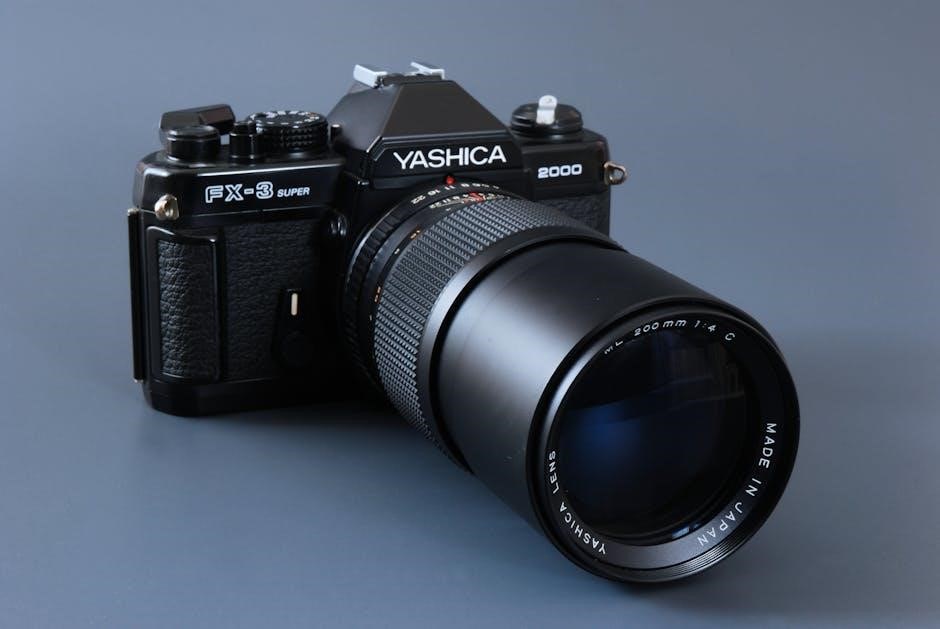
The Canon Digital Rebel XT, released in 2005, is a high-performance DSLR camera featuring an 8․0-megapixel CMOS sensor and EF-S lens compatibility․ Popular among photography enthusiasts, it offers versatile shooting modes and user-friendly design, making it an excellent choice for both beginners and advanced photographers․
1․1 Overview of the Camera and Its Importance
The Canon Digital Rebel XT, introduced in 2005, marked a significant step in DSLR technology, offering an 8․0-megapixel CMOS sensor and EF-S lens compatibility․ Its compact design and intuitive interface made it accessible to both beginners and professionals․ The camera’s versatility in shooting modes and compatibility with a wide range of lenses solidified its importance in the photography world, making it a popular choice for capturing high-quality images with ease and precision․
1․2 Key Features of the Canon Digital Rebel XT
The Canon Digital Rebel XT boasts an 8․0-megapixel CMOS sensor, delivering high-resolution images with excellent detail․ It features the EF-S lens mount, expanding compatibility with a wide range of Canon lenses․ The camera offers various shooting modes, including manual and automatic options, catering to both beginners and advanced users․ Additionally, it supports custom functions, enabling personalized settings for enhanced creativity․ Its compact design, fast shutter speed, and compatibility with memory cards like CF/MD ensure versatility and efficiency, making it a reliable choice for photographers․

Understanding the Canon Digital Rebel XT Manual
The Canon Digital Rebel XT manual provides detailed guidance on camera setup, shooting modes, and troubleshooting․ It covers features, customization options, and maintenance tips, ensuring optimal performance․
2․1 Structure and Content of the Manual
The Canon Digital Rebel XT manual is a comprehensive guide structured to help users master the camera’s features․ It begins with an overview of the camera’s components and setup, followed by detailed explanations of shooting modes, customization options, and troubleshooting․ The manual also covers technical specifications, maintenance tips, and software updates․ Appendices provide quick references and error solutions, ensuring users can optimize their photography experience effectively․
2․2 How to Navigate the Manual Effectively
To navigate the Canon Digital Rebel XT manual effectively, start with the table of contents for quick access to specific topics․ Use the index to locate detailed explanations of features like shooting modes or custom functions․ Begin with the setup guide for initial configurations, then explore sections on advanced features such as white balance and autofocus․ Visual aids like diagrams and charts help clarify complex settings․ Always refer to the troubleshooting section for resolving common errors and updating firmware․ Regularly review the appendices for quick references and error solutions․ This structured approach ensures you maximize the camera’s potential and enhance your photography skills․
Key Features and Specifications
The Canon Digital Rebel XT features an 8․0-megapixel CMOS sensor, EF-S lens compatibility, and various shooting modes․ It supports custom functions and offers versatile photography options․
3․1 8․0-Megapixel CMOS Sensor
The Canon Digital Rebel XT is equipped with an 8․0-megapixel CMOS sensor, delivering high-resolution images with excellent detail and color accuracy․ This sensor ensures crisp and vibrant photos, even in challenging lighting conditions․ Its high sensitivity allows for effective low-light photography, making it suitable for a wide range of shooting scenarios․ The CMOS technology also contributes to efficient power consumption, enhancing battery life during extended use․
3․2 Canon EF-S Lens Mount Compatibility
The Canon Digital Rebel XT features an EF-S lens mount, ensuring compatibility with Canon’s extensive range of EF-S and EF lenses․ This versatility allows photographers to explore various focal lengths and specialized optics, from wide-angle to telephoto and macro lenses․ The EF-S mount is designed to optimize lens performance for the APS-C sensor size, providing enhanced image quality and creative flexibility for both amateur and professional photographers․ This compatibility expands the camera’s potential for diverse shooting scenarios․
3․3 Shooting Modes and Custom Functions
The Canon Digital Rebel XT offers a variety of shooting modes, including Auto, Manual, Aperture Priority (AV), Shutter Priority (TV), and Program (P), catering to both beginners and advanced users․ Custom functions allow photographers to tailor settings to their preferences, such as ISO, autofocus, and metering modes․ The camera also features six custom functions, enabling precise control over image capture, ensuring versatility and personalized shooting experiences for diverse photography needs and styles․
Setting Up the Camera
The Canon Digital Rebel XT requires initial setup, including inserting the battery, attaching the lens, and formatting the memory card․ Follow on-screen instructions to set the date, time, and language, ensuring proper camera functionality․ Review settings to confirm everything is correctly configured for optimal performance․
4․1 Initial Setup and Configuration
Insert the battery and memory card, ensuring they are securely locked in place․ Attach the lens by aligning the mount and turning clockwise until it clicks․ Turn the camera on and select your language, date, and time using the LCD screen․ Navigate through the menu to set additional preferences, such as image quality and autofocus options․ Refer to the manual for detailed guidance on configuring these settings to optimize your camera’s performance․ Proper setup ensures a smooth shooting experience․
4․2 Charging and Battery Management
Insert the NB-2LH battery into the charger, ensuring it aligns with the contacts․ Charge until the indicator turns green, typically taking 90-120 minutes․ Avoid using third-party batteries to prevent damage․ Store the battery in a cool, dry place when not in use․ For optimal performance, avoid fully depleting the battery before recharging․ Proper charging and storage extend the battery’s lifespan and ensure reliable camera operation․ Always use Canon-approved chargers for safety․
4․3 Memory Card Selection and Formatting
Use a compatible CompactFlash (CF) card with the Canon Digital Rebel XT․ Select a card with sufficient storage capacity based on your needs․ Before first use, format the memory card in the camera to ensure proper operation․ Formatting deletes all data, so transfer important files to a computer beforehand․ Regular formatting helps maintain card performance and prevents errors․ Always use a compatible CF card to avoid issues during shooting;
Shooting Modes and Techniques
The Canon Digital Rebel XT offers various shooting modes, from Auto to Manual, catering to both beginners and advanced photographers․ Explore techniques to enhance your photography skills and adapt to different scenarios with customizable settings․
5․1 Auto Mode for Beginners
The Canon Digital Rebel XT’s Auto Mode is designed for beginners, simplifying photography by automatically adjusting settings like exposure, focus, and white balance․ This mode allows users to focus on composition and creativity without worrying about technical details․ It’s ideal for those new to DSLR cameras, providing point-and-shoot convenience while delivering high-quality images․ The camera’s advanced sensor ensures sharp, detailed photos, making it a great starting point for learning photography fundamentals․
5․2 Manual Mode for Advanced Users
Manual Mode on the Canon Digital Rebel XT offers advanced users full control over camera settings, enabling precise adjustments to aperture, shutter speed, ISO, and white balance․ This mode is ideal for those who want to explore creative photography techniques, such as depth of field manipulation or low-light shooting․ With manual control, users can achieve customized results tailored to their artistic vision, making it a powerful tool for refining photographic skills and capturing unique moments․
5․3 Customizing Shooting Settings
Customizing shooting settings on the Canon Digital Rebel XT allows users to tailor the camera to their preferences․ Through the menu system, photographers can adjust exposure compensation, white balance, and focusing modes․ Custom Functions enable advanced tweaks, such as adjusting the behavior of autofocus or metering․ These features empower users to personalize their shooting experience, ensuring optimal results in various lighting conditions and creative scenarios․ This level of customization caters to both novice and experienced photographers․
Advanced Features and Functions
The Canon Digital Rebel XT offers advanced features like White Balance, ISO settings, and Autofocus modes, allowing precise control over imaging․ Flash and external lighting options enhance versatility․
6․1 White Balance and ISO Settings
The Canon Digital Rebel XT allows precise control over White Balance and ISO settings to enhance image quality․ White Balance ensures accurate color representation in various lighting conditions, with options like Auto, Daylight, Shade, and Tungsten․ The ISO range (100-1600) adjusts sensitivity for low-light shooting․ Lower ISOs reduce noise, while higher settings enable shooting in dim environments․ These features provide flexibility for capturing vibrant, detailed images in diverse situations, making the camera versatile for creative photography․
6․2 Autofocus and Metering Modes
The Canon Digital Rebel XT features a 7-point autofocus system for precise subject tracking and sharp images․ It offers One-Shot AF for stationary subjects and AI Servo AF for moving objects․ The camera also includes 35-zone evaluative metering for balanced exposures․ Users can choose between Evaluative, Center-Weighted, and Partial metering modes to suit their shooting needs․ These features ensure accurate focus and exposure, delivering high-quality results in various photography scenarios․
6․3 Using Flash and External Lighting
The Canon Digital Rebel XT features a built-in flash for low-light conditions and supports external Speedlite flashes like the 580EX II․ The camera offers red-eye reduction and flash exposure compensation․ When using external lighting, the E-TTL II autoflash system ensures accurate flash metering․ For optimal results, sync the flash with the camera’s shutter speed and adjust settings to avoid overexposure․ Proper use of flash and external lighting enhances image quality in challenging lighting scenarios․

Maintenance and Troubleshooting
Regularly clean the sensor and lens to maintain image quality․ Refer to the manual for troubleshooting common errors and updating firmware for optimal performance․
7․1 Cleaning the Sensor and Lens
Regular cleaning of the sensor and lens is essential for maintaining image quality․ Use a soft, dry brush or microfiber cloth to remove dust․ For stubborn smudges, apply a few drops of cleaning solution to the cloth, not the lens․ Avoid harsh chemicals or tissues, as they may scratch the surface․ Refer to the manual for detailed cleaning guidelines to ensure optimal camera performance and prevent damage․ Proper maintenance ensures sharper, clearer photos․
7․2 Resolving Common Errors and Issues
Common issues with the Canon Digital Rebel XT include error messages like “Error 99” and connectivity problems․ Check camera settings, clean the sensor, and ensure proper lens alignment․ For connection errors, verify cable compatibility and restart the camera․ Refer to the manual for troubleshooting guides or update firmware to resolve software-related issues․ Regular maintenance and firmware updates help prevent errors and ensure smooth operation․ Always follow Canon’s recommended procedures to avoid further complications․
7․3 Updating Firmware and Software
Updating the Canon Digital Rebel XT’s firmware and software ensures optimal performance and fixes issues․ Download the latest firmware from Canon’s official website, ensuring compatibility with your camera model․ Use a fully charged battery and avoid interruptions during the update․ Follow the step-by-step instructions in the manual or Canon’s support page to complete the process successfully․ Regular updates enhance functionality and maintain camera efficiency․
Downloading and Accessing the Manual
The Canon Digital Rebel XT manual is available for free download as a PDF from Canon’s official website․ It provides detailed guidance for optimal camera use․
8․1 Official Canon Website and Resources
The official Canon website offers comprehensive resources for the Digital Rebel XT, including the user manual, drivers, and software updates․ Users can easily navigate to the support section, search for their camera model, and download the necessary files․ The manual is provided in PDF format, ensuring accessibility across various devices․ Additionally, Canon’s website features troubleshooting guides and FAQs to assist users in resolving common issues and optimizing their camera’s performance․
8․2 PDF Download and Viewing Tips
Download the Canon Digital Rebel XT manual from the official Canon website as a PDF file․ Ensure you use Adobe Acrobat Reader for optimal viewing․ A “COPY” watermark may appear when opened with Reader 5․x or later versions․ Printing the manual will also include this watermark․ Save the PDF to your device for easy access and reference․ This format allows you to navigate and search the document effortlessly, ensuring a smooth user experience․